Blog
Get to Know BMH-BJ Preschool
If you are exploring early learning options across the Denver metro area, we have gathered answers to the most common questions local par...
Read More

What a Qualistar 4-Rating Means for Your Child’s Preschool Experience
Choosing a preschool is one of the first major educational decisions you make for your child. When you start touring schools across the D...
Read More
Helpful Articles
The Power of Play: A Pediatric Role in Enhancing Development in Young Children (AAP)
The Case for Play-Based Learning / Embracing Learning Through Play (Harvard Graduate School of Education)
Head Start Early Childhood Learning & Knowledge Center – Importance of Play
Playing to Learn: The Role of Play in the Early Childhood Curriculum (NAEYC)
Jewish Education in Early Childhood (My Jewish Learning)
Elevating the Profession of Jewish Early Childhood Education (eJewishPhilanthropy)
The Cohen Center for Modern Jewish Studies (Brandeis University)
Colorado Shines Quality Standards (Colorado Department of Early Childhood)
The Importance of High-Quality Pre-K Standards (NIEER)
Denver Preschool Program (DPP) – Research & Impact Reports
BMH-BJ Calendar

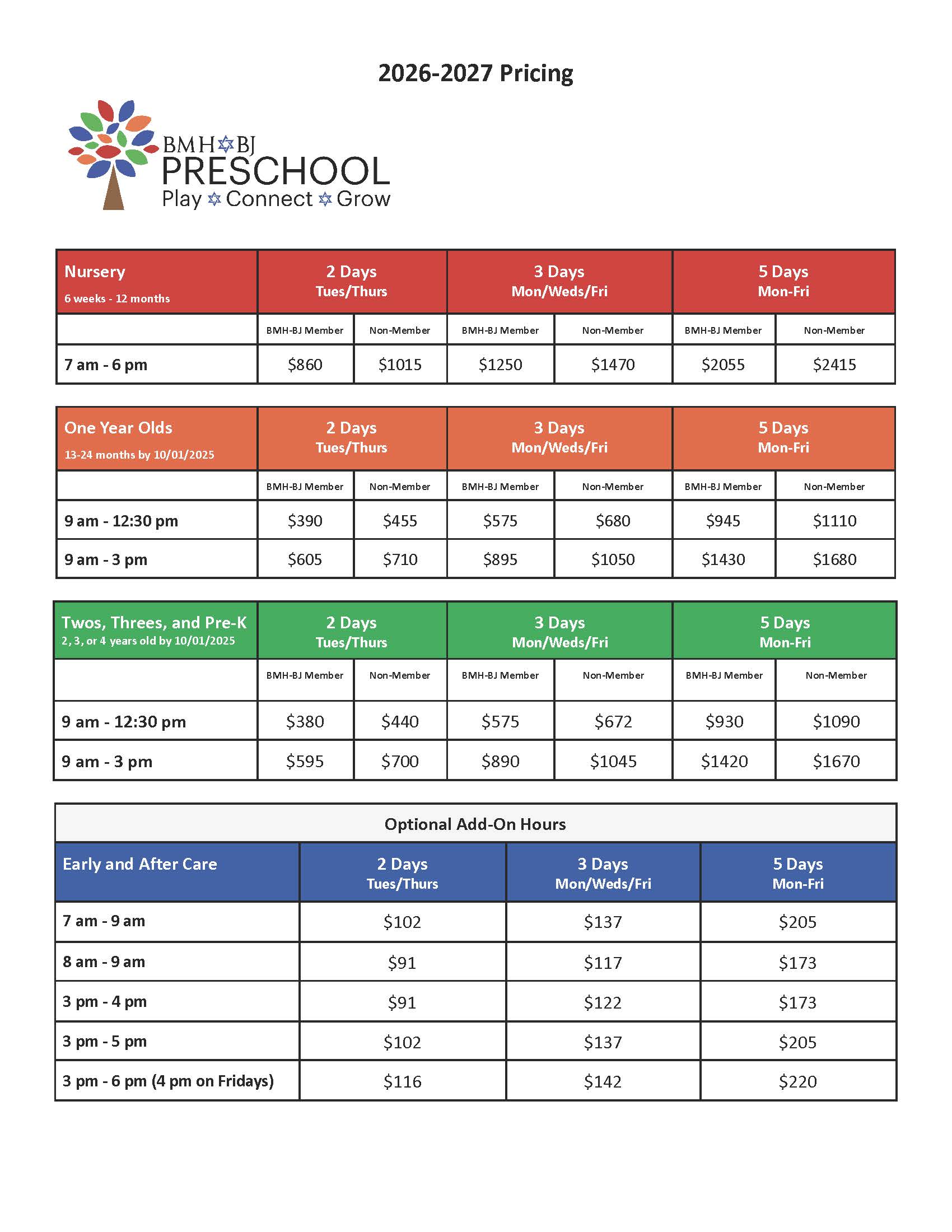
2026-2027 Pricing


General Information
School Forms
Health Forms & Information

Back-to-School events
Pizza in the Hut in September
Dreidels and Donuts every December
A Mitzvah Project every January
“Under the Big Top” Purim Carnival and Book Fair in February or March
Teacher Appreciation Week in May
Additional events for friends and family
Is My Child Ready?
Most children aren’t ready to potty train until they’re between 2 and 4 years old. In fact, the American Academy of Pediatrics discourages parents to begin training prior to 18 months. These are some classic signs that your child is ready:
Use a Rewards System
If your child has expressed all the classic signs of being ready for potty training, one way to get them trained is through a rewards chart system. Read more on the Centers for Disease Control website, plus download a chart and get training!
Your child is uncomfortable in a wet or soiled diaper.
Your child hides to pee or poop.
Your child shows an interest in others’ use of the potty or copying bathroom behaviors.
Your child goes for longer periods of time with a dry diaper.
Your child wakes up from a nap with a dry diaper.
Your child begins verbalizing that they are going in their diaper or that they’re about to go or that they’ve just gone.
Don’t Train During Transitions
When it comes to potty training, you do not want to start during times of transition, including:
Start of a new school year
Impending birth of a sibling
Moving schools, houses, or town
Transitions are already hard enough on a young child, but adding potty training into the mix can make it even harder — and you can face regression after the transition is over, making the entire process even harder on your child
Additional resources
Additional resources Here are some great resources for reading more about potty training, which generally begins around 24 to 36 months.